
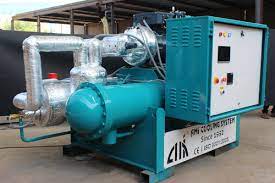
Glycol chillers have become integral components in a wide range of industries, providing efficient and precise temperature control for various processes. These systems play a crucial role in maintaining consistent temperatures in critical applications such as food and beverage production, pharmaceuticals, chemical processing, data centers, and more. Glycol Chiller in India will delve into the fundamental workings of glycol chillers, their key components, and their significance in diverse industrial settings.
How Glycol Chillers Work: A Brief Overview
Glycol chillers operate on the principle of heat exchange, where a refrigeration cycle is employed to extract heat from a specific environment and transfer it elsewhere. Unlike standard air conditioning units that cool the air in a room, glycol chillers are designed to cool a liquid called glycol, which is then used to maintain the desired temperature in a process or application.
Key Components of Glycol Chillers
Compressor: The compressor is the heart of the refrigeration cycle. It compresses the low-pressure, low-temperature refrigerant gas into a high-pressure, high-temperature gas. This process raises the temperature of the gas, making it ready for the next phase.
Condenser: In the condenser, the high-pressure, high-temperature gas is condensed into a high-pressure liquid as it releases heat to the surrounding air or water. This causes the refrigerant to change from a gas to a liquid state.
Expansion Valve: The high-pressure liquid refrigerant then passes through an expansion valve, where it rapidly expands and turns into a low-pressure, low-temperature mixture of liquid and vapor. This sudden expansion causes the refrigerant to cool significantly.
Evaporator: The cooled refrigerant mixture is now sent to the evaporator, where it absorbs heat from the glycol solution that needs to be cooled. As a result, the glycol solution’s temperature drops, and it is ready to circulate through the process requiring cooling.
Pump: A pump is used to circulate the glycol solution through the evaporator and the process that needs cooling. This ensures a continuous transfer of heat from the process to the glycol solution.
Significance in Different Industries
Glycol chillers manufacturers understand the importance of tailored solutions for various industries. In the food and beverage sector, glycol chillers are utilized to maintain precise temperatures during fermentation, storage, and packaging. Pharmaceutical companies rely on them to ensure the stability of sensitive medications and chemicals. Data centers use glycol chillers to prevent overheating of servers and equipment. Additionally, manufacturers benefit from glycol chillers by controlling temperatures in production processes to ensure consistent product quality.
Glycol Chiller Manufacturers and Their Role
Glycol chiller manufacturers play a critical role in designing and producing these specialized systems. They develop solutions that meet the unique temperature control requirements of different industries, offering a range of capacities and configurations. The Glycol Chillers manufacturers incorporate advanced technologies and components to enhance the efficiency and reliability of their systems. Additionally, they often provide maintenance services and support to ensure the continued optimal performance of the chillers.
Glycol Chillers in India: Meeting Diverse Needs
The application of Glycol Chiller in India is widespread across industries such as textiles, pharmaceuticals, chemicals, and more. With the country’s diverse climate and production demands, glycol chillers offer a reliable means of maintaining temperature-sensitive processes. Manufacturers in India offer a variety of glycol chiller solutions, customized to local requirements and conditions.
Conclusion
Glycol chillers are indispensable assets in modern industries where precise temperature control is crucial. Their intricate mechanism of heat exchange, coupled with the expertise of glycol chiller manufacturers, ensures efficient operation and optimized performance across a broad spectrum of applications. As industrial processes continue to advance, glycol chillers will remain essential tools for maintaining product quality, process integrity, and overall efficiency.
 Earth Cooling System