
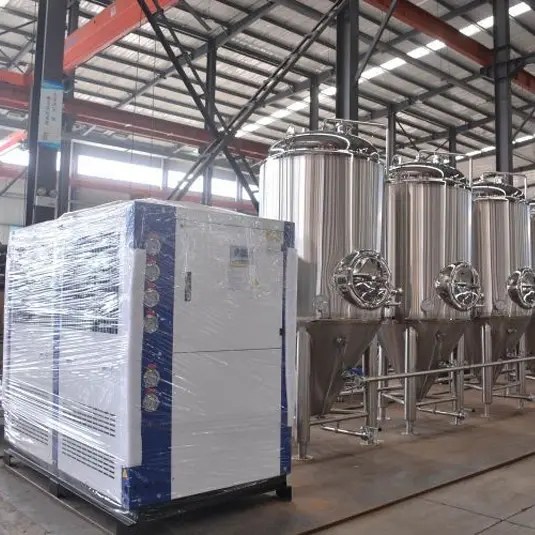
Glycol chillers are refrigeration systems designed to cool water or other fluids to low temperatures using a mixture of water and glycol as the heat transfer fluid. The use of glycol, typically ethylene or propylene glycol, is essential because it lowers the freezing point of the fluid, allowing it to operate at sub-zero temperatures without the risk of freezing. This characteristic makes glycol chillers versatile and suitable for a wide range of applications.
Components of a Glycol Chiller:
To understand the process of a glycol chiller, let’s first examine its key components:
Compressor: The compressor is the heart of the chiller system. It compresses the refrigerant gas, raising its temperature and pressure.
Condenser: The hot, high-pressure refrigerant gas flows to the condenser, where it releases heat to the surrounding environment, causing it to condense into a high-pressure liquid.
Expansion Valve: After condensation, the high-pressure liquid refrigerant passes through an expansion valve or metering device, where it undergoes a sudden pressure drop. This expansion results in a significant temperature reduction.
Evaporator: The cold, low-pressure liquid refrigerant then enters the evaporator, where it absorbs heat from the fluid being cooled (usually a water-glycol mixture) or the air in direct-contact chillers.
Pump: A pump circulates the glycol solution through the chiller’s evaporator and the application’s cooling process.
Control System: Modern glycol chillers are equipped with advanced control systems that monitor and regulate temperature, pressure, and other parameters to ensure optimal performance and efficiency.
The Process of Glycol Chilling:
Now that we understand the essential components, let’s delve into the step-by-step process of glycol chilling:
Compression: The process begins with the compressor, which sucks in low-pressure, low-temperature refrigerant gas (commonly R-134a or R-410a). The compressor then compresses this gas, increasing its temperature and pressure significantly.
Condensation: The hot, high-pressure refrigerant gas is directed to the condenser, where it releases heat to the surroundings. This causes the refrigerant to change from a gas to a high-pressure liquid. During this phase, the temperature of the refrigerant drops, but it remains at a high pressure.
Expansion: The high-pressure liquid refrigerant moves through the expansion valve or metering device. As it passes through, the pressure rapidly decreases, leading to a substantial temperature drop. The refrigerant now exists as a cold, low-pressure liquid.
Evaporation: The cold liquid refrigerant enters the evaporator, which is in contact with the fluid to be cooled (e.g., a water-glycol mixture). Heat is transferred from the fluid to the refrigerant, causing it to evaporate and turn back into a low-pressure gas.
Absorption of Heat: During the evaporation process, the refrigerant absorbs heat from the fluid, effectively cooling it down. This chilled fluid is then pumped to the application where it maintains the desired temperature.
Circulation: A pump circulates the chilled fluid (often a water-glycol mixture) through the application’s cooling coils or heat exchangers. This process continues as long as cooling is required.
Regulation: The control system of the glycol chiller continually monitors the temperature of the fluid in the application and adjusts the chiller’s operation to maintain the set temperature. This ensures precise temperature control and energy efficiency.
Heat Dissipation: In the case of air-cooled glycol chillers, the heat generated during compression and condensation is dissipated into the ambient air. In larger systems or those requiring lower temperatures, a cooling tower or other heat rejection system may be employed.
Applications of Glycol Chillers:
Glycol chillers find extensive use in various industries due to their versatility and ability to maintain precise temperatures. Some notable applications include:
Food and Beverage Industry: Glycol chillers are vital for maintaining ideal temperatures during food and beverage processing, ensuring product quality and safety.
Pharmaceutical Industry: They are used for temperature-sensitive pharmaceutical manufacturing processes, storage, and research.
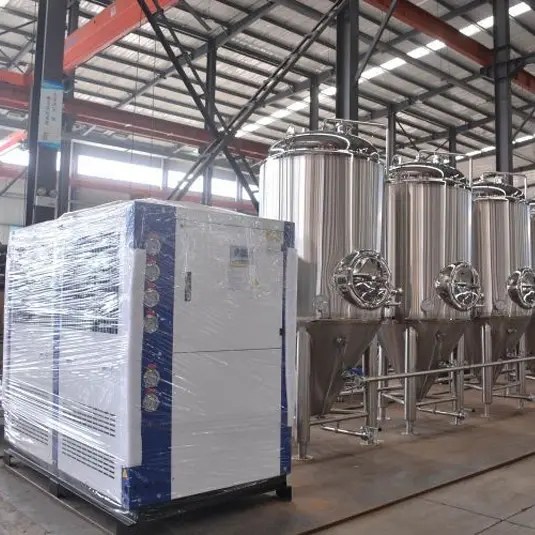
Brewing and Winemaking: Glycol chillers are instrumental in controlling fermentation temperatures and preserving product quality.
HVAC Systems: They are employed in large-scale air conditioning systems for commercial and industrial buildings to cool air or other heat transfer fluids.
Plastics Industry: Glycol chillers are used to cool molds and maintain stable temperatures during plastic manufacturing processes.
Data Centers: These chillers help maintain optimal operating temperatures in data centers, preventing overheating and equipment damage.
Chemical Industry: They are used for temperature control in chemical reactions, laboratory setups, and pilot plants.
Significance of Glycol Chillers in India:
In India, Glycol Chiller in india play a crucial role in various sectors, contributing to the country’s economic growth and infrastructure development. Here are some key reasons for their significance:
Industrial Growth: As India experiences rapid industrialization, glycol chillers are essential for maintaining efficient and consistent cooling in manufacturing processes across industries such as textiles, chemicals, and automotive.
Agriculture and Food Processing: India’s agriculture sector relies on glycol chillers to maintain the freshness and quality of harvested produce. Food processing and cold storage facilities also depend on these systems for preservation.
Pharmaceutical Manufacturing: With a growing pharmaceutical industry, glycol chillers are indispensable for maintaining stringent temperature requirements during drug manufacturing and storage.
Commercial and Residential Cooling: As the demand for air conditioning in commercial and residential buildings rises, glycol chillers are used in HVAC systems to provide comfort cooling.
Renewable Energy: Glycol chillers are utilized in solar thermal power plants to cool the working fluid in the solar collectors, improving overall energy conversion efficiency.
Data Centers: As the IT sector expands, data centers require efficient cooling solutions to ensure uninterrupted operation. Glycol chillers help maintain ideal temperatures in data center facilities.
Hospitality and Tourism: Hotels and resorts in India rely on glycol chillers for maintaining comfortable indoor temperatures and offering guests a pleasant experience.
Conclusion
Glycol chillers are a critical component of various industries and have a significant impact on India’s economic growth and development. Understanding the process of glycol chilling and its applications is essential for ensuring efficient cooling and temperature control in diverse settings across the country.
This comprehensive guide has provided insight into the process of glycol chillers, their components, applications, and the importance of glycol chillers in India’s industrial landscape. Whether it’s preserving the quality of pharmaceuticals, ensuring optimal
 Earth Cooling System