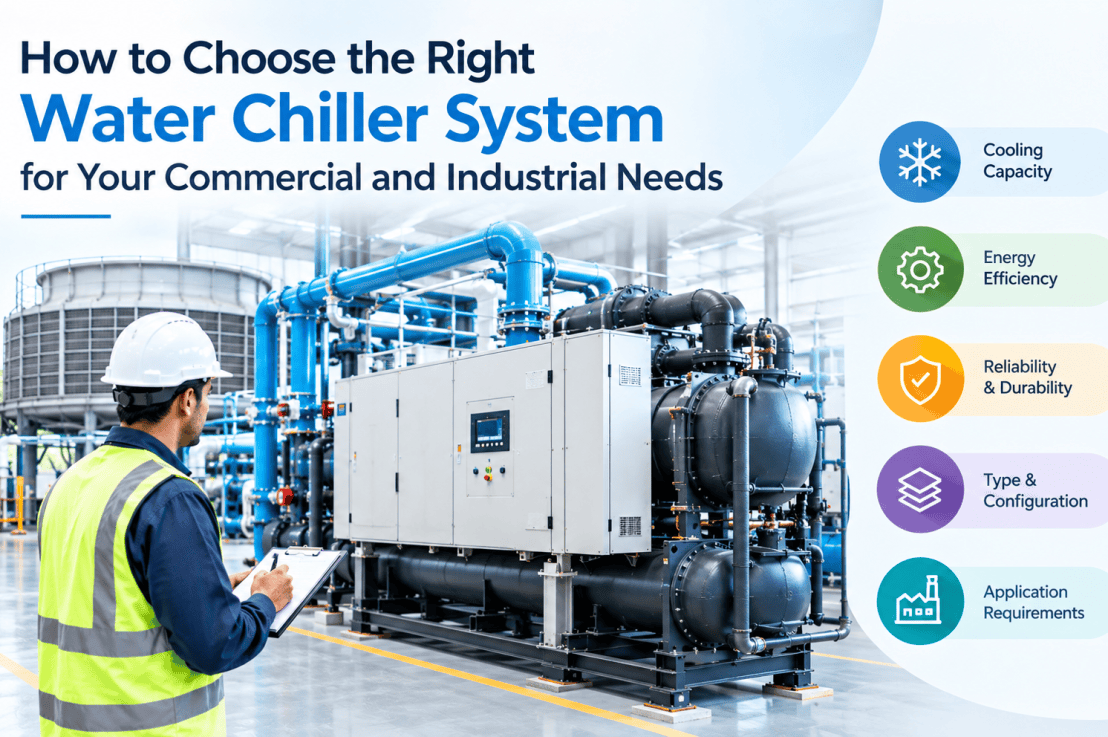
Maintaining the right temperature is essential for many commercial and industrial operations. Whether cooling manufacturing equipment, supporting production processes, or maintaining comfortable conditions in a large facility, an efficient cooling solution can directly influence performance and operating costs. A water chiller system is one of the most widely used solutions for applications that require reliable and consistent cooling.
However, choosing the right system requires more than comparing prices and cooling capacities. The ideal solution depends on your application, heat load, operating conditions, energy requirements, and long-term maintenance needs.
Understand Your Cooling Requirements
The first step is to determine exactly what you need the cooling system to accomplish. Every facility has different requirements based on its equipment, production processes, operating hours, and environmental conditions.
Think about the amount of heat that has to be eliminated as well as the desired temperature for water flow rate, the number of equipment or locations that need cooling. A clear understanding of the load of cooling allows you to choose a system that will work efficiently, without being over-sized.
A smaller system might struggle to keep the required temperature and an over-sized system will consume more energy, and thus increase the initial cost of investment.
Choose the Right Chiller Configuration
Different cooling configurations can be used for various purposes. Both water-cooled and air-cooled systems have their own advantages and the best choice is contingent on the space available and operating conditions, water availability, as well as the required cooling capacity.
For businesses researching air-cooled solutions, an internal link to air cooled chiller in India can provide additional information about applications and system options.
For larger facilities with continuous and demanding cooling requirements, water-cooled solutions may provide an effective approach. An internal link to the water cooled chiller system can guide readers toward more detailed information about this type of cooling arrangement.
The important point is to choose a configuration based on your actual operating requirements rather than simply selecting the most powerful option available.
Consider Cooling Capacity and Temperature
Cooling capacity is one of the most important factors when selecting a water chiller system. The system needs to remove enough heat to maintain the required process or facility temperature under normal operating conditions.
Consider both present and potential requirements. If you anticipate that production will grow or if additional equipment is expected to be added, choosing an equipment that is flexible enough will help you avoid costly changes later on.
Stability of temperature is equally crucial. Certain requirements require precise control of temperature while others might require a greater temperature range. Understanding these needs will assist you in choosing the best control and equipment.
Focus on Energy Efficiency
The energy consumption of a chiller can make up the majority of the overall operating expense. Therefore, efficiency must be considered at the outset instead of only after installation.
Examine the performance of your compressor and efficiency of heat exchangers Control system, operational conditions and the expected load fluctuations. A system that is able to adjust its operation in response to changes in demand for cooling can reduce unnecessary energy use.
The goal is not simply to purchase an energy-efficient machine but to choose a water chiller system that remains efficient under your actual working conditions.
Evaluate Installation and Maintenance
The requirements for installation could have a significant impact on the overall design. When choosing a chiller to install be sure to consider the available location for installation, the pipe needs, electrical connections, the quality of water, ventilation and the ease of servicing.
It is also recommended to consider maintenance in the buying decision. Regular inspections, cleaning, maintenance, check-ups on components and prompt servicing can assist in maintaining the cooling efficiency and minimize the chance of unexpected downtime.
Choosing an experienced supplier can make installation and ongoing support easier. Businesses looking for a suitable commercial water chiller manufacturer can use an internal link to explore solutions and manufacturer-related information in greater detail.
Consider the Total Cost of Ownership
The purchase price is just one component of the total cost of chillers. Consumption of energy, maintenance of replacement components downtime, availability of service and the life of the equipment can influence the total cost of investment.
A system that has a lower cost at the beginning may not be the most cost-effective choice if it uses greater energy, or needs regular maintenance. However investing in dependable and efficient equipment could be more beneficial in the long haul.
Before you make a final decision make sure you compare the initial investment as well as expected operating costs.
Plan for Long-Term Performance
A well-designed cooling system will keep your business running for many years instead of just meeting today’s demands. Think about future growth in production and changes in demand for cooling and support for service, along with the possibility of replacing components.
Earth Cooling System provides industrial and commercial cooling solutions designed around application requirements, helping businesses focus on dependable performance, efficient operation, and long-term cooling needs.
Final Thoughts
The best water chiller system requires understanding your cooling requirements as well as the temperatures requirements and installation conditions, as well as maintenance requirements, energy consumption and the plans for the future. There isn’t a single system that is equally effective for every industrial or commercial application.
If you carefully consider your requirements and work with a seasoned supplier of cooling solutions You can choose an option that provides stable temperature control and supports efficient and cost-effective operation.
The ideal chiller isn’t necessarily the largest or most expensive, but it is the one that is most compatible with your particular cooling needs.
 Earth Cooling System